Bandoneon Buying – Clear Guidance for Choosing and Caring for Your Instrument
Buying a bandoneon is exciting, but it can feel confusing at first. The instrument is rare, handmade, and often several decades old, so the market works differently than most instruments.
This guide gives you simple insights into prices, condition, layouts (142/144), basic care, and common repairs. You get clear explanations that help you make confident decisions.
If you want a quick introduction to the instrument’s structure and sound before diving into buying advice, visit Bandoneon Basics.
What You Will Learn About Bandoneon Buying
This page gives you a simple roadmap for buying and caring for a bandoneon. Each section highlights one clear idea, explains why it matters, and includes a short example so you can apply the knowledge right away. The goal is to help you avoid common mistakes and feel confident while evaluating an instrument.
- How to understand realistic price ranges
- How to check a bandoneon’s condition
- The difference between the 142 and 144 systems
- How to safely buy a used instrument
- Essential maintenance steps that prevent damage
- When repairs or tuning are necessary
Understanding Bandoneon Pricing
Most playable bandoneons start around $3,000. New instruments often begin near $5,000, while restored vintage models—especially Alfred Arnold—typically range from $8,000–$12,000+. Prices vary based on condition, airtightness, reed quality, and brand history.
New builds offer smooth mechanics and predictable tuning. Vintage instruments provide the warm, classic tango tone many players prefer. Your choice depends on whether you value modern ease of play or traditional sound character.
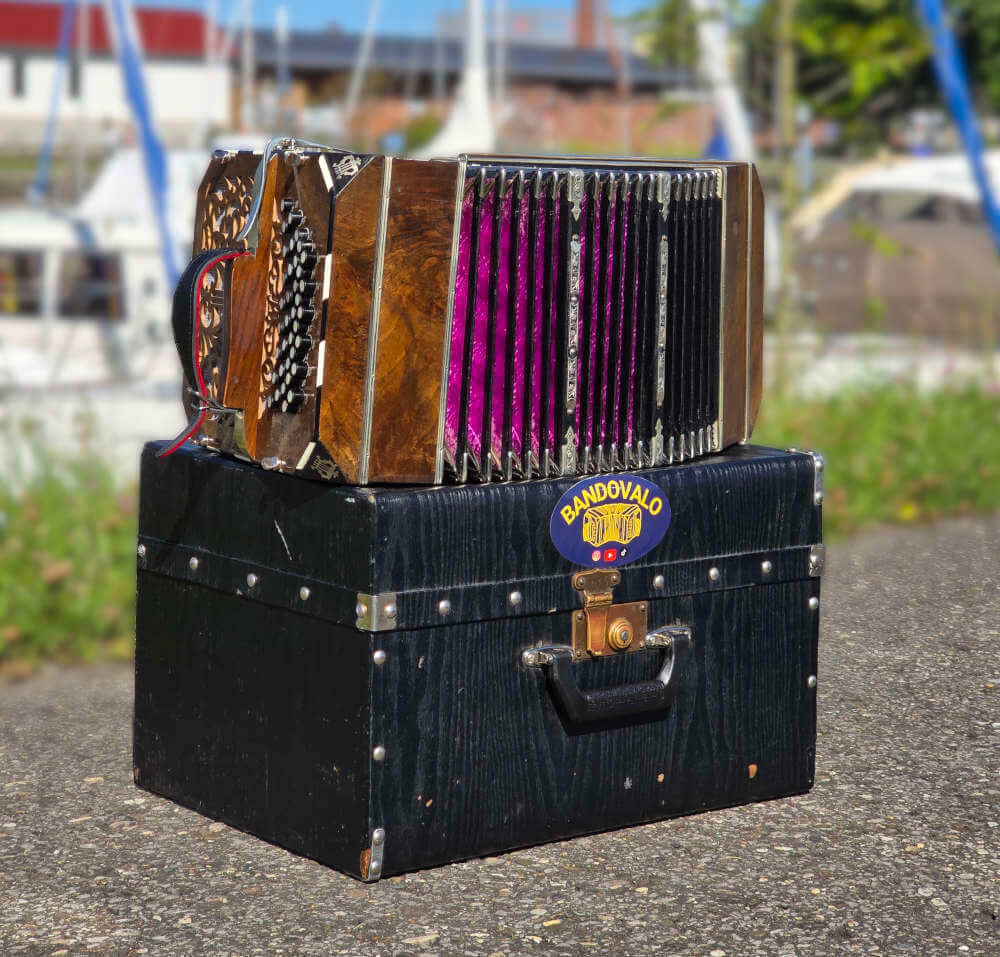
How to Choose the Right Bandoneon
142 vs 144 – The Key Differences
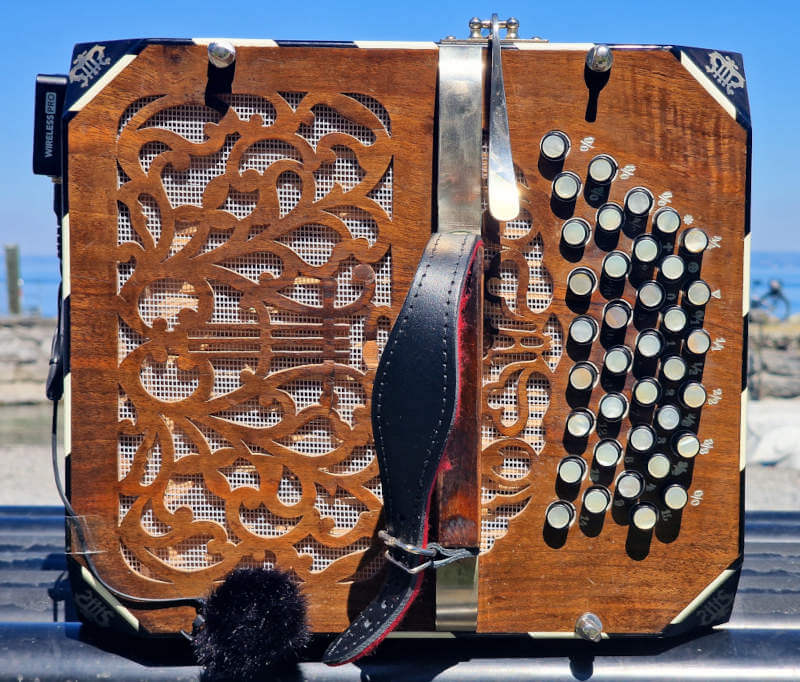
Bandoneon 142 – Rheinische Tonlage
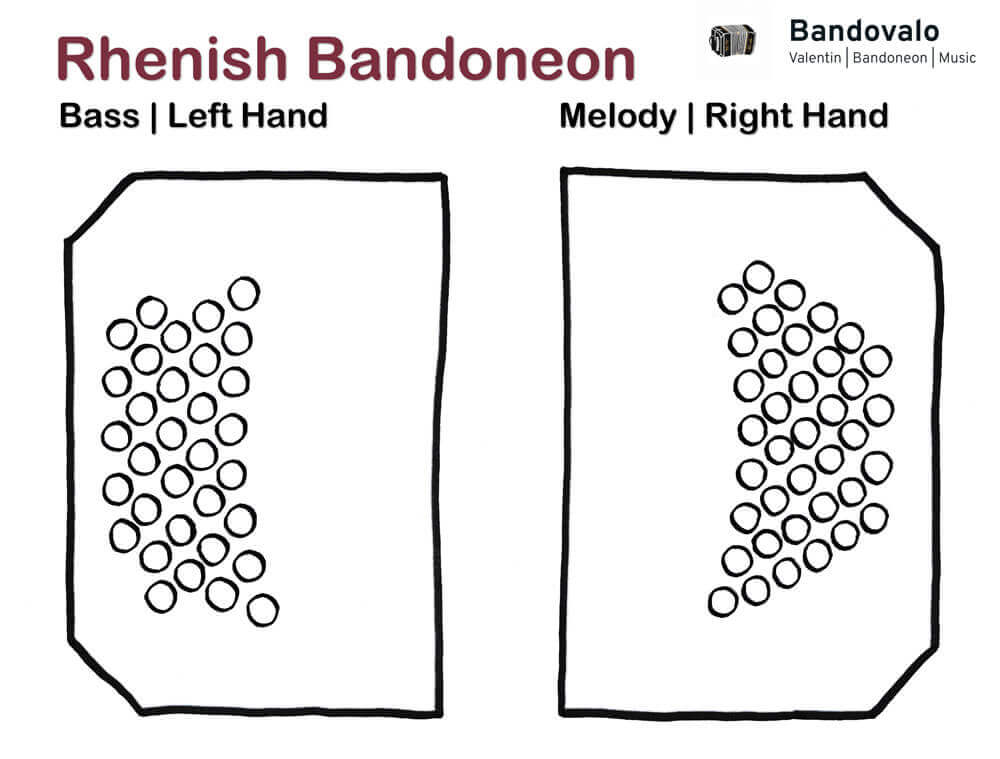
The global tango standard. Built on the Rheinische Tonlage, it offers expressive phrasing, traditional note placement, and the layout most teachers and tango schools use.
If your focus is tango or ensemble playing, 142 is the most supported system worldwide.
Bandoneon 144 – Einheits System
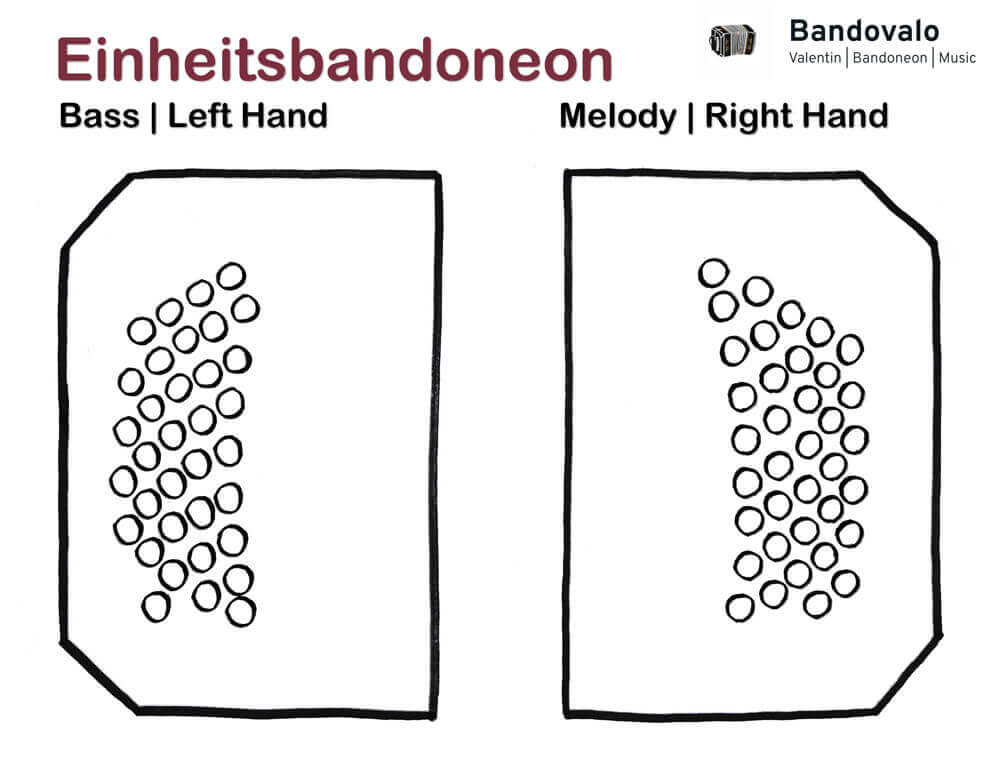
The Einheits system. It adds two extra notes and uses a more symmetrical, uniform layout.
While less common in tango, it works well in folk, classical, and exploratory music because the structure is easier to memorize and offers broader harmonic options.
Quick Comparison
| Feature | 142 Layout | 144 Layout |
|---|---|---|
| Usage | Tango standard worldwide | Used in folk, classical & mixed styles |
| Structure | Traditional Rheinische Tonlage | More symmetrical with 2 extra notes |
| Learning | Large community + many teachers | Fewer resources; niche audience |
| Best For | Players focused on tango tradition | Players wanting harmonic flexibility |
If you want to explore all layout variants beyond these two, including unisonoric and historical systems, see the full guide in my bandoneon structure article.
Condition Checklist
A reliable bandoneon should be airtight, have smooth and responsive buttons, clean and stable wood, and no moldy or damp smell. These signs help you judge whether the instrument is ready to play or requires restoration.
For a broader view of how the bandoneon compares to other free-reed instruments, visit Bandoneon Comparisons.
Where to Buy a Bandoneon
Trusted Makers and Restorers
Specialists offer the safest buying experience. They check airtightness, rebuild mechanics, and tune the reeds so the instrument plays reliably from day one.
If you need trusted professionals, explore our Bandoneon Expert Directory.
Buying Used Instruments Safely
Quality varies widely on the used market. Focus on dryness, airtight bellows, clean reeds, and stable wood.
If you want to understand how bandoneon layouts and construction affect condition, see the Bandoneon Structure article.
Used vs New – Which Fits You?
Vintage bandoneons offer the warm, traditional tone many players love. New instruments provide smoother mechanics and a more predictable response.
Choose based on your musical goals and how much maintenance you are comfortable with.
Bandoneon Maintenance Basics
Regular care keeps your bandoneon stable and prevents long-term damage. Wipe the surface with a soft, dry cloth after each session, close the bellows gently, and store the instrument in its case.
Keep it in a dry room between 65–77°F and below 40% humidity to avoid mold, valve curling, and rust on the reeds.
Avoid cleaning sprays, alcohol, oils, and DIY tuning. The internal parts — reeds, valves, and mechanics — are highly sensitive.
If you want a simple overview of how the instrument works and why this care matters, visit the Bandoneon Basics .
Repair, Restoration and Tuning
Common Issues
Sticky buttons, air leaks, and rattling reeds are the most common problems. These issues develop slowly when the instrument is exposed to moisture, dryness, or general wear.
Early detection helps keep the bandoneon responsive and prevents larger repairs.
When You Need an Expert
Internal work — reeds, valves, springs, levers, or pallet pads — should always be handled by a specialist. The mechanics inside a bandoneon are extremely delicate, and improper adjustments can reduce playability or cause long-term damage.
For trusted professional service, visit Robert Wallschläger’s repair and tuning service .
What Tuning Involves
Tuning requires adjusting more than 200 reeds. Each reed must be cleaned, balanced, and aligned precisely. This process affects the entire sound and stability of the instrument, which is why tuning is typically done during professional restoration.
Bandoneon Buying – Frequently Asked Questions
Yes, basic care like cleaning and humidity control is easy to learn. For a simple introduction to how the bandoneon works and why maintenance matters, read the Bandoneon Basics guide .
To care for your bandoneon, keep it in a dry, temperature-stable environment and away from moisture or direct sunlight. Always close the bellows gently after playing, clean it regularly, and handle straps and buttons with care. Routine professional check-ups help maintain its long-term condition.
Reade more care and maintenance tips in the Bandoneon Insight Room.
Look for tight bellows, smooth buttons, clean wood, and no moldy smell. Understanding how the instrument is built makes this easier — see the Bandoneon Structure guide .
Tuning a bandoneon is a delicate process that should be handled by a specialist. Each reed must be carefully adjusted to the correct pitch by filing or waxing. If your instrument sounds off, consult a professional repair workshop instead of attempting to tune it yourself.
Usually every few years, depending on humidity and how often you play. Tuning requires delicate reed work, so it should always be done by a specialist. Learn more from Robert Wallschläger’s tuning service .
Yes — if you buy from a specialist or request a detailed condition report with photos and bellows tests. Random online auctions are unpredictable because you cannot verify airtightness or reed health. For trusted options, explore our Bandoneon Expert Directory .
Most beginners choose the 142 layout because it is the tango standard and easier to find teachers for. The 144 works well for folk or classical music. For a broader view of how the bandoneon compares to other free-reed instruments, visit Bandoneon Comparisons .
Bandoneons aren’t mass-produced, so finding one takes research and patience. You can buy restored vintage models, handmade instruments from specialized builders, or secondhand from trusted musicians. Before buying, check for build quality, the correct tuning system (like Einheitsband), and overall condition.
Continue Learning
These guides help you understand the bandoneon step by step. Each page builds on the last so you can learn confidently and at your own pace.