
Bandoneon Instrument Comparison – Clear Differences Explained
Many beginners exploring free-reed instruments wonder how the bandoneon compares to the accordion and concertina. This page offers a simple overview of the key differences: bisonoric push/pull logic, button layouts, sound, and learning curve.
You will see why the bandoneon feels expressive, why the accordion is easier for beginners, and how the concertina became its ancestor. If you want basic fundamentals first, visit Bandoneon Basics .
What You Will Learn on This Page
This guide gives you a clear orientation across the most important bandoneon comparisons. You will understand how the instrument differs from the accordion and concertina, why its bisonoric push/pull logic feels so unique, and how these elements shape its sound and playing experience.
- Bandoneon vs Accordion – key differences in mechanics, sound, and learning curve
- Bandoneon vs Concertina – how both instruments are related and where they diverge
- Bisonoric vs Unisonoric – simple explanations with practical examples
- Sound & Playing Feel – why the bandoneon is expressive and the accordion more stable
- Which Instrument Fits You – factors like style, goals, and ease of learning
If you want to build a solid foundation before comparing instruments, visit the Bandoneon Basics for a short overview of how the instrument works.
Bandoneon vs Accordion – The Essential Comparison
This is the most common bandoneon comparison. Both instruments use bellows and free reeds, but their logic and playing approach differ significantly.
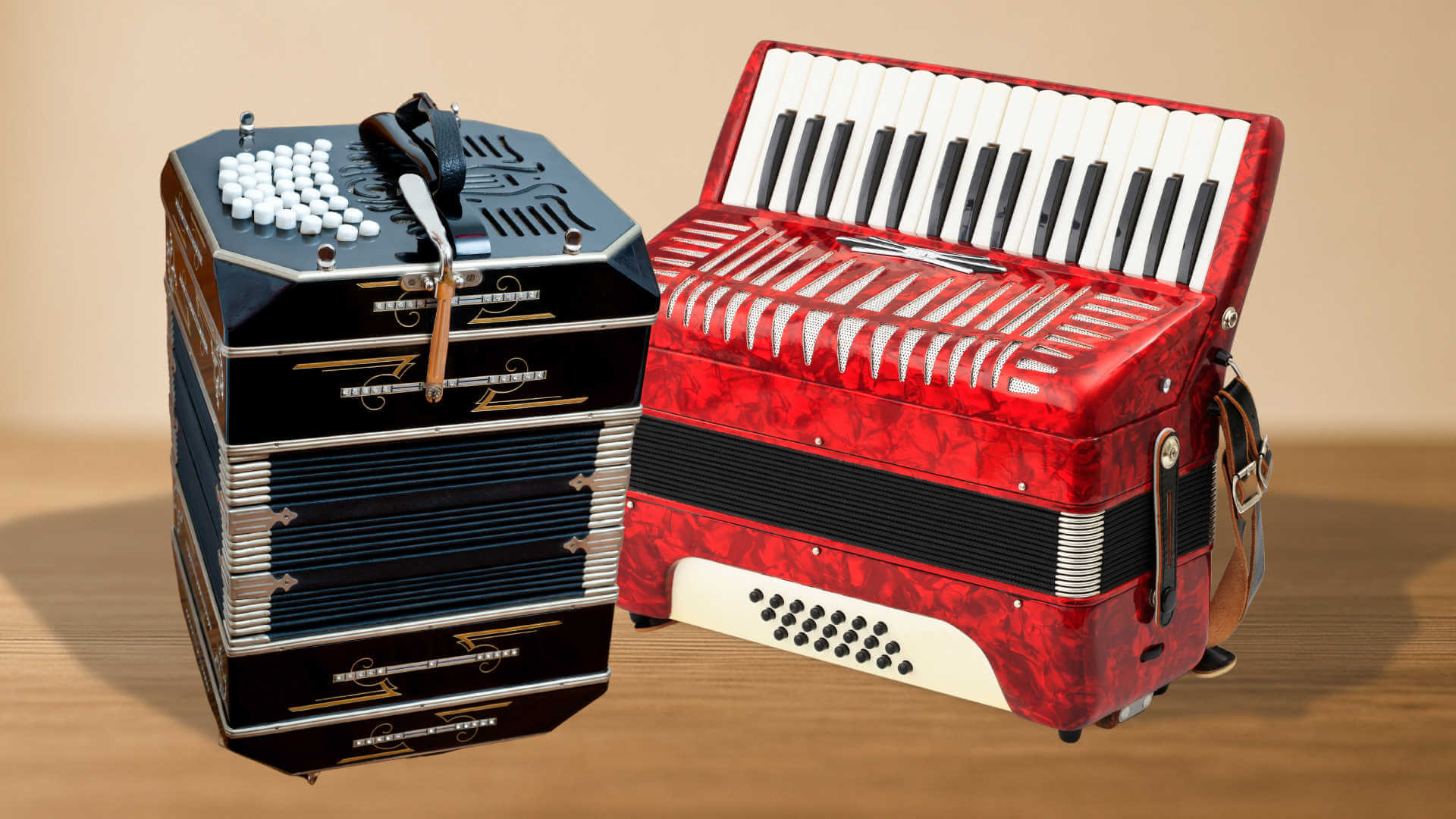
Most accordions are unisonoric (same note on push and pull), while the bandoneon is bisonoric, giving each button two notes depending on bellows direction.
For a deeper explanation, you can also read our detailed guide Bandoneon vs Accordion – Full Comparison .
Mechanics & Note Logic
Bandoneon: bisonoric push/pull logic, two notes per button.
Accordion: unisonoric layouts with predictable fingering and preset bass/chords.
Playing Experience
Accordion feels stable and structured for beginners.
Bandoneon demands more orientation but rewards with greater expressive control.
Sound / Music Differences
Accordion: full, rounded, and versatile with register switches.
Bandoneon: raw, warm, emotional — iconic for tango phrasing.
Which Instrument Fits You?
Bandoneon for expressive phrasing and tango.
Accordion for versatility, easier learning, and instant accompaniment.
Quick Comparison Table
| Aspect | Bandoneon | Accordion |
|---|---|---|
| Mechanics | Bisonoric push/pull; two notes per button | Unisonoric; stable, predictable layout |
| Sound | Raw, warm, emotional; iconic tango tone | Full, rounded, versatile with registers |
| Learning Curve | Challenging; complex orientation. | Beginner-friendly; structured systems |
Bandoneon vs Concertina
The concertina is the historical ancestor of the bandoneon. It is smaller, lighter, and built for straightforward melodic playing, which is why it became popular in many folk traditions.
The bandoneon developed from these early concertinas into a larger, more complex instrument with extended button rows, richer harmonies, and a deeper, more expressive sound — qualities that later shaped the voice of tango music.

Button Logic & Layout
Concertinas vary by system and often use simpler patterns.
Bandoneons feature larger, more complex bisonoric layouts designed for rich harmony and expressive phrasing.
Sound & Musical Role
Concertinas blend smoothly into folk music traditions.
Bandoneons deliver a darker, more resonant tone — the characteristic sound of tango.
Who’s the Concertina For?
The Concertina is a great choice for folk players, newcomers seeking an easier start, or anyone wanting a light, portable free-reed instrument.
Other Free-Reed Instruments at a Glance
Many free-reed instruments share the same basic principle: a metal reed vibrates freely when air passes over it. This includes the harmonica, melodeon, accordion, concertina, and Asian instruments like the shō or sheng. This section gives you a quick overview to help you place the bandoneon within this wider family.
Harmonica
The harmonica works with a similar push/pull airflow concept but is driven by breath instead of bellows. Its sound is direct and expressive, making it one of the bandoneon’s closest “relatives” in feel, especially when emphasizing accents and phrasing.
Melodeon / Diatonic Accordion
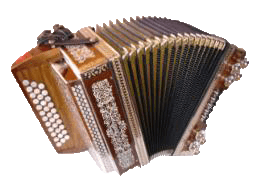
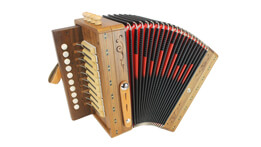
The melodeon is also bisonoric, producing different notes on push and pull. It uses preset chords and simplified button layouts tailored for folk traditions. Compared to the bandoneon, it offers quicker access to harmony but far less expressive nuance.
Instrument Comparison – Frequently Asked Questions
Usually not. Most bandoneons have no register switches. Instead, players change the sound by controlling bellows pressure, articulation, and finger attack. This makes the timbre highly expressive, but also more dependent on the player’s technique.
Yes. Accordions can switch between different timbres, cover more musical genres, and provide instant accompaniment through preset bass and chord systems.
Yes, the bandoneon is a type of concertina, but it stands out through its unique layout, deeper tone, and distinct musical role. Compared to English or Anglo concertinas, it has more buttons and is especially important in tango and classical music.
No. The bandoneon evolved from the German concertina but is larger, heavier, and designed for richer harmony. Concertinas are simpler, lighter, and mostly used in folk music.
The key difference between bandoneon and accordion is the button layout, sound, and musical purpose. Bandoneons use a more asymmetrical button system with a darker, emotional tone, common in tango. Accordions are easier to play, often include piano keys, and fit more musical styles.
For a detailed side-by-side analysis, visit my comparison article:
Bandoneon vs Accordion: What are the Differences?
Most musicians find the bandoneon harder to play than the accordion. Its bisonoric layout means each button plays two notes depending on bellows direction, and the lack of visual consistency adds to the challenge. Accordions have more logical layouts, making them easier to learn for many beginners.
Explore this topic in more depth in my article:
Bandoneon vs Accordion: What are the Differences?
The bandoneon is essential to tango music because of its expressive, melancholic tone and natural push-pull phrasing. It can “breathe” with the music, making it the voice of longing, loss, and love in tango – unlike any other instrument in the genre.
Curious about more?
If you want to deepen your understanding of bandoneon comparisons and related topics, these guides help you build a clear foundation step by step: